
Why the 2026 USCIS Adjustment Memo Cannot Reach the EB-5 Investor
Just before Americans fired up for their Memorial Day weekend, USCIS dropped a policy memo that sent the immigration world into a panic. With lawyers, investors, and visa holders alike scrambling to analyse their message. So, what does it actually mean? And more importantly, should EB-5 investors be worried?
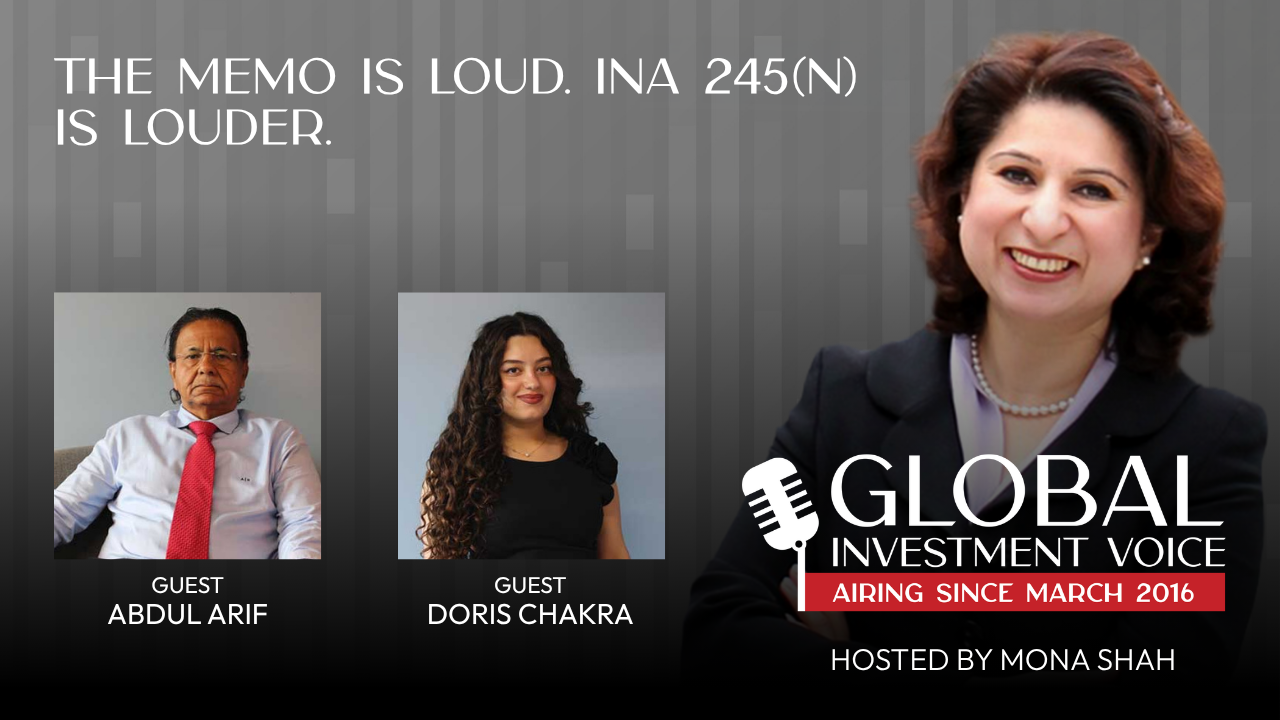
In this episode of Global Investment Voice, Mona Shah is joined by immigration attorney Abdul Arif and paralegal Doris Chakra to cut through the chaos and deliver what really matters. Whilst the law hasn’t changed, the posture has. Discretion has always existed in adjustment of status decisions, and this memo is less of a revolution and more a reminder of what officers could already do.
Crucially for EB-5 investors, the Reform and Integrity Act of 2022 has your back. The right to concurrent filing under Section 245N is baked into statute. No policy memo can override an Act of Congress.
But that doesn’t mean you should be complacent. The trio dig into what this means for applicants from higher-scrutiny countries, what “extraordinary circumstances” actually means (spoiler: nobody knows yet), and why a well-prepared file with strong counsel is your best defence right now.
For those in EB-5 or the adjustment of status process, this is the episode for you. Want more? Why not read our article on the same issue!
“The fear that it has created has given an undue impression that all is lost – when it is not.” – Abdul Arif
Abdul Arif
Abdul Arif is an EB-5 specialist with a background in international tax law and anti-money laundering. He earned his law degree from St. Thomas University School of Law in Miami and began his legal career primarily practicing white collar criminal defense.
Since entering the EB-5 and immigration field in 2018, he has assisted real estate developers in securing over $100 million in project financing, established eight Regional Centers, and filed more than 55 EB-5 petitions in the past few years. His practice also includes EB-5 litigation before the U.S. District Court for the District of Columbia.
He is licensed before the Michigan Supreme Court, the United States Supreme Court, and the United States District Court for the Northern District of Texas, and has litigated pro hac vice in numerous states across the United States.
Think you may have missed a podcast? Then check out our recent episodes to catch up!
Transcript
This transcript was produced using AI and subsequently edited for style and clarity. The edits do not alter the substance of the speaker’s remarks
Mona Shah (0:58 – 1:42)
Welcome back to Global Investment Voice. Over the Memorial Day weekend, a single USCIS policy memo set off a wave of panic across the US immigration world. And I can tell you, we’ve had headlines from New York Times, NBC, Guardian, you name it.
Immigrants are in a panic and there’s a lot of discussions going on. And we would like to hear on Global Investment Voice. We do try to cover all aspects of investment immigration and this really is pertinent.
But today, we would like to cut through all of the noise that is out there. And I am joined by my colleague, Arif Abdul and his assistant, Doris Chakra. Welcome to Immigration Voice.
Abdul Arif and Doris Chakra (1:43 – 1:47)
Hey, good morning, Mona. Thank you for inviting us.
Good morning. It’s good to be here.
Mona Shah (1:47 – 2:21)
Well, with all of that’s what’s going on out there, it’s good to hear another viewpoint. And I know you are exceptionally well-versed in this area, Arif. But let’s just start and lay it out a little bit for our listeners who really aren’t quite sure.
So it happens that there is a way if you come into the United States and you’re working over there on say a different visa that you can actually adjust your status and you don’t have to go out. And Doris, what did this memo actually say? Because obviously it is related to that ability to adjust.
Doris Chakra (2:22 – 2:39)
Mona, prior to this memo coming out, eligibility was typically treated as sufficient for approval. What this memo is saying is that eligibility is no longer enough. And meeting the requirement does not guarantee approval.
It changes the posture, not the law.
Mona Shah (2:40 – 2:51)
Oh my goodness. So in plain English, Arif, it’s basically saying that no one can adjust and everyone has to go to the consulate and we all know what kind of nightmare the consulates are.
Abdul Arif (2:51 – 3:02)
Indeed. So essentially, as Doris said, it changes the posture, gives the officer more discretion and adds a layer of uncertainty that shouldn’t be there.
Mona Shah (3:03 – 3:15)
Right. Well, we obviously are not going to talk about all of the areas. Of course, you can mention certain areas.
I’m pretty sure this topic’s going to come up over and over again. But Arif, EB-5 is a little different, right?
Abdul Arif (3:15 – 3:32)
Indeed it is. Because the explicit command to allow adjustment inside the US is baked into the law of RIA, which is Reform and Integrity Act of 2022.
Mona Shah (3:33 – 3:39)
That’s right. So back in 2022, there was the latest piece of legislation which covered EB-5, right?
Abdul Arif (3:39 – 4:03)
That is correct. The central message of, and the core assertion is really memo, it reminds the officers that adjustment of status is a matter of discretion. But guess what?
It always has been a matter of discretion anyway. It’s not, the outcome has never been guaranteed. It’s not guaranteed.
Now it was never guaranteed.
Mona Shah (4:03 – 4:24)
You know, you’re right. I’ve done cases, I’m talking about back like 20 years ago, Arif, where maybe it was an asylee and they were trying to adjust and an officer could turn around and say, the officer didn’t have the right to kick the person out, but he had the right to say, look, I think you’re a waste of space and I’m not going to agree to you having a green card. I mean, that happened then.
This is not a new policy.
Abdul Arif (4:25 – 4:41)
Indeed, it’s not. The fear that it has created has given an undue impression that all is lost when it is not. It’s just a layer that they have added and asserted in writing, which already was there.
Mona Shah (4:42 – 4:53)
Doris, but what do you think of the timing, the day before a major national holiday, when we know how many people are even around on that Friday? Most people have already taken off.
Doris Chakra (4:53 – 5:22)
Honestly, we’ve seen this happen in the past where the USCIS does this right before longer weekend, obviously creates chaos and fear amongst people. And typically they clarify on it within the next couple of weeks. Right now, obviously we don’t actually have much clarification on this.
What we’re doing so far is trying to analyse what we have of the memo so far, but we should have more clarity in the next couple of weeks.
Mona Shah (5:23 – 5:34)
Yeah, yeah, I hope so. But even before we get to that clarity, Arif, because you’re very well-versed in EB-5, I know. And what else do you practise other than the EB-5?
Abdul Arif
Yeah, so a little bit of background, Mona. I won’t bore you. I did my JD and LLM in Miami and my focus back then was to be in a specialist in anti-money laundering and doing white collar crime.
And then it didn’t work out quite the way I envisioned. So I ended up doing EB-5 investment and basically-
Mona Shah
I’m not going to laugh about the correlation between the two, sorry.
Abdul Arif
I can assure you there’s plenty of correlation there.
So this area came natural to me, especially the financial part came naturally to me. So the financial background helped with the EB-5. I’ve been doing EB-5 since 2018, relatively new to this world, but not new at all to money laundering and financial crime.
We’ve had an enormous amount of phone calls by H-1B persons who are transitioning over to EB-5.
Mona Shah (6:37 – 7:06)
I think we should emphasise that this podcast is related to EB-5 and not necessarily if you were filing an EB-1 or an EB-2. I mean, that is the area when, Doris, you mentioned we need clarification. I feel like the industry in EB-5, and correct me if I’m wrong, have rallied around the fact that, yes, Arif, you’re right, it’s baked in.
The provision for adjustment of status for somebody who’s filing for EB-5 is baked into the law.
Abdul Arif (7:06 – 7:49)
Yeah. That’s exactly right. It’s baked into the law.
In all other forms, there’s a statutory right anyway, but it’s not as nearly as strong as for EB-5 under the Reform and Integrity Act of 2022. Yeah, obviously, without trying to be too dry, Section 245N is where our hook is, where it allows us to do. But then again, as you and B discussed earlier, the matter of discretion to approve a 485 has always been there.
This is nothing new.
Mona Shah (7:49 – 8:09)
Right, but here’s my question to you. I mean, you do an awful lot of deportation hearings as well, and especially in relation to this particular area. Can a policy memo, now this is all that we have right now, can a policy memo, or even if this goes into a regulation, can it override a statute?
Abdul Arif (8:10 – 8:42)
Absolutely not. You know, of the policy memo, it’s just a policy memo and a guideline. It is nowhere near as any legal authority.
You know, Congress writes the law, and the agency writes the regs to carry them out. And below that is a policy memo. Basically, a policy memo, Mona, as you know, is simply telling the agency its own offices how to think.
That’s really the essence of it.
Mona Shah (8:42 – 9:19)
But here’s the other side of it, the coin. A policy memo plus a discretionary, you know, this command, so to speak, to really be discretionary, it is going to change the way that EB-5 lawyers put in an adjustment of status application. Now, we’ve been doing this for many, many, many years, and we know that, I mean, adjustment of status is not something which is connected necessarily to how you get your green card.
So if you got your green card because you’ve got extraordinary ability, or you’re a big business person, or maybe you’re an amazing cook, the adjustment of status, they don’t look at that, right, Doris? No.
Abdul Arif (9:20 – 9:21)
No, they do not.
Mona Shah (9:21 – 9:23)
Yeah. So what would a lawyer look at?
Abdul Arif (9:24 – 9:59)
Yeah, but see, this is where it becomes a little hairy. You know, this policy memo talks about officer can grant a waiver for extraordinary circumstances, and it doesn’t tell what extraordinary circumstances are. So we’re kind of scratching our heads, you know, define extraordinary circumstances.
Is it the economic impact of 800,000 or a million bucks warrant a finding of extraordinary circumstances? We don’t know that, do we?
Mona Shah (9:59 – 10:16)
No, we don’t. And honestly, it’s going to be, I mean, I think personally, you know, give me your opinion, but it’s going to be dependent on the officer as to what he thinks. Yeah.
I know that one thing, they are scared of the EB-5 crowd because we’re the one about the litigation.
Doris Chakra (10:16 – 10:26)
Exactly. I was going to say that that’s the nice thing about EB-5. There are so many protections at so many stages of the process too.
And when things go wrong, we can always litigate.
Abdul Arif (10:26 – 10:46)
Right. Correct. And also, you know, I have seen in counsellor processing interviews, you know, the EB-5 candidate is treated with kid gloves because they know these people have money, they have resources to really not take a simple yes or no and go home.
Mona Shah (10:46 – 10:47)
Good point.
Abdul Arif (10:48 – 10:59)
Yeah. I mean, obviously there’s no, I don’t have any empirical evidence to prove my point, but just a general observation, these guys are treated differently.
Mona Shah (11:00 – 11:23)
You know what my fear is though, is that the people who are from the countries which are on the so-called soft travel bans. So if you’re already in this country, say you’re here from, say you’re from Bangladesh or Pakistan or one of those countries, and you’re in this country legally on an L1 visa or F1 visa, I don’t think it’s going to be as easy anymore to be able to adjust.
Abdul Arif (11:23 – 11:40)
I absolutely 100% agree with that because that is the stated, you know, that is not even a dog whistle, it’s a four alarm fire. They clearly are saying they do not want immigration from these countries, period.
Doris Chakra (11:41 – 12:01)
Arguably, it was already pretty difficult for them to adjust within the US. What we’ve seen in our practise actually is a lot of those people already had scheduled interviews that were paused, cancelled, et cetera. So they were already under a lot of heat and this memo just makes things that much more difficult for them.
Mona Shah (12:02 – 12:23)
Well, I have another question for you, Abdul. I was reading some of the blogs which have come out and I think people are not really understanding what 245N actually is. It’s like being thrown around.
I mean, it’s something obviously which protects the filing, but I have seen stuff out there which says, oh, if you do EB-5, your green card is guaranteed and you can relax. That’s not true, is it?
Abdul Arif (12:24 – 13:58)
Absolutely not. There’s nothing guaranteed. And any attorney that tells you an EB-5 is guaranteed, please run away from that attorney.
No attorney should be able to guarantee anything. All we can guarantee is our best efforts. And in full disclosure, disclose to the client where the risk factors for approval are.
That’s all we can do ethically, morally, and rightfully so, we inform them. So again, coming back to this, Mona, EB-5 protection is not that the discretion disappears. Congress has taken two specific things off the table.
For the better, the INA 245N removes the discretion whether concurrent filing can happen. And the Section 245K says, even if you have 180 days of past status problem, the discretion still survives. I don’t want our potential applicants to relax saying that.
The only thing we can say is if compared to other forms of adjustment of status, in other words, legal pathways to green card, far and away, EB-5 is still the better options. Not by any means guaranteed, but if I had a choice of feeling good about an H-1B guy versus EB-5 guy, I would pick the EB-5 guy anyway.
Mona Shah (13:58 – 14:30)
Yeah, I hear you. I do think the memo is open for, it’s really set up for like a textbook, arbitrary and capricious kind of challenge. But at this point, what we are seeing from our clients is what do we do when we are doing our adjustment of status?
Do we just file as the same? Do we have to file extra? Do we have to have like background checks?
Do we have to put a whole resume? So what are you advising clients who you are going to file their adjustment, say tomorrow or next week, now that this memo’s there?
Abdul Arif (14:31 – 15:00)
Yes, so as you say, because the word shall in 245N is mandatory, not optional. So each EB-5 application that is concurrently filed shall be considered to be properly filed. USCIS does not get to decide whether the filing counts or not.
Congress has already said it is.
Mona Shah (15:01 – 15:06)
So you’re saying, Arif, that an officer cannot reject an EB-5 concurrent filing as improperly filed?
Abdul Arif (15:06 – 15:08)
Absolutely not.
Mona Shah (15:08 – 15:08)
Okay, yeah.
Abdul Arif (15:08 – 15:19)
He can always find other reasons. If he doesn’t like what he doesn’t like, he can always reject that. But we certainly cannot not accept it.
Mona Shah (15:19 – 15:51)
Okay, so here’s one other quick point I would like to ask you. There is a provision, in the same provision, it’s the 245K, which forgives a certain amount of days that you perhaps overstayed. And it often happens with our clients when they come in for EB-5 and they want to adjust in the United States.
And for one reason or the other, they might be a 10 days, two weeks or something as an overstay. Right now, do you believe that with this new memo, that USCIS are just going to ignore this ability to forgive under 245K?
Abdul Arif (15:51 – 16:20)
They better not because it’s baked in the law. They cannot ignore that. There’s nothing in this memo that speaks to 245K, which is forgiving of the grace period.
You know, in other words, the applicant does not accumulate unlawful presence. In other words, his permitted stay continues in these 60 days. So we’re safe as far as that is concerned, as far as this part.
Mona Shah (16:20 – 16:45)
Yeah, I can tell you one thing though. I don’t know if you have a comment on this, that because we work a lot with our global programmes and colleagues overseas, this memo was a gift, absolute gift to them. They have gone crazy with the blogs that, oh, you don’t want to go to the US.
It’s so uncertain. Anything that’s marked with grace is uncertain. It’s working.
For the first time ever, there have been more people leaving US than coming in.
Abdul Arif (16:46 – 17:22)
That’s unfortunate, you know, I mean, but that’s a kind of a policy, political question. We will leave it to those experts. You and I want to see how we can use this latest memo to help understand, not necessarily create some kind of fear, but to assuage the fear and then encourage clients to apply now before, especially from India and China.
So the policy, the availability, visa availability does not retrogress.
Mona Shah (17:22 – 17:46)
Right, so really a good takeaway from all of this, Arif and Doris, is don’t panic. You have the right to file an adjustment. You don’t have to rely on a consulate because that panics a lot of people.
We all know how arbitrary consulates are. And if you get an RFE, again, that’s not something to panic, but do you have any takeaways for people to perhaps prepare beforehand?
Abdul Arif (17:47 – 18:27)
See, already our EB-5 applicants prepare already so much. I cannot think of anything additional to prepare until there is an RFE issued because RFEs are often arbitrary. Often they ask for the same things over and over after being provided.
So I cannot think of anything extra other than to be fully aware of what we are talking about, that the filings can happen. It’s a matter of discretion to still alive and not to panic.
Doris Chakra (18:27 – 18:43)
If I could leave investors with one line, honestly, it would be that the statute did not change and the EB-5 right to file is still intact. I don’t think they should panic. A well-built file with a good counsel is the right response to this.
Mona Shah (18:43 – 18:54)
Right, you know, Arif, this came out just before Memorial Day weekend, and it came out in such a way, it was designed to panic. Why? Do you have a thought?
Why do you think?
Abdul Arif (18:55 – 19:13)
You know fully well, Mona, because it’s the policy directive of the White House Deputy Counsel Miller and who absolutely does not want any legal immigration. And that’s designed, as you know, major negative news coming out of Washington is always on a Friday night.
Mona Shah (19:13 – 19:14)
Yeah, yeah.
Abdul Arif (19:14 – 19:30)
To create the maximum impact and panic because the weekend is there, the holiday is there, people are scrambling. It’s working exactly like it was designed to release late Friday afternoon to have the maximum negative impact.
Mona Shah (19:30 – 19:36)
It did, it absolutely did. I mean, we’ve been so busy on this holiday weekend. It was like, leave me alone.
Abdul Arif (19:37 – 20:08)
Exactly right. But Mona, you’re a happy warrior. You have been a happy warrior in this arena.
And in fact, you’ve been a gladiator. Let me put it that way. And I’m happy to join the ranks of being a gladiator in the arena.
And this too shall pass and we will prevail. You know, the court of law is always the option, right? If you know fully well, there’s somebody somewhere out there preparing a complaint, and he’s probably looking for plaintiffs.
Mona Shah (20:08 – 20:10)
That’s right. It’s probably already started.
Abdul Arif (20:11 – 20:35)
But see, just FYI, you know, I’m putting my lower head back on. The injury is not mature yet. In other words, no one has been harmed yet.
So I don’t know if it might be too early to file a lawsuit, but I’ll leave that to the litigation bar of AILA to see when the appropriate time, and I’m sure you and I will be watching closely.
Mona Shah (20:36 – 20:58)
Oh yes, watching and recording and for our audience, bringing you the latest. In fact, I think it would probably be a good idea to come back and see how this is actually working, because I presume that this is an immediate call to action by USCIS, and perhaps something to do with all of the delays that people are seeing in the adjudication right now.
Abdul Arif (20:58 – 21:11)
That is so true. See, it always is a little bit refreshing, Mona, because you, what I consider are the big elite firms on the East Coast, but there’s a lot happening in the Midwest too. I just want you to know that.
Mona Shah (21:12 – 21:12)
Other than ranching?
Abdul Arif (21:13 – 21:15)
Other than ranching.
Mona Shah (21:17 – 21:25)
Arif, it’s a pleasure having you and Doris on, and we welcome you back to speak more on all of these topics. Thank you for coming on Global Investment Voice.
Abdul Arif (21:26 – 21:28)
Thank you for having us. Thank you for having us.