
EB-5, the 2026 midterms and the September 30, 2027 regional center deadline: why the one immigration program Congress must act on is the one nobody campaigned about.
By: Mona Shah, Esq. | November 10, 2026
On February 25, 2025, President Trump announced, with Commerce Secretary Howard Lutnick at his side, “We’re going to end the EB-5 program and replace it with the Trump Gold Card.” [1] Twenty-one months later, the Gold Card has produced remarkably little: press reports through mid-2026 counted a single approval, and USCIS’s own backlog data showed 100 Gold Card petitions sitting untouched. [2][3] The EB-5 program, meanwhile, is still standing, which is more than can be said for the President’s majority in Congress. Its future now belongs to a Congress his party no longer controls.
On November 3rd, Democrats won both the House and the Senate. Three days later, the President named Stephen Miller, the architect of his hard-line immigration agenda, as chief of staff; Miller started on Monday, November 9th. [4][5] Washington’s commentariat reached its verdict before the confetti was swept up: Congress will investigate, the White House will dig in, and nothing much will change. For immigration enforcement, that verdict is largely right. For EB-5, it is exactly wrong.
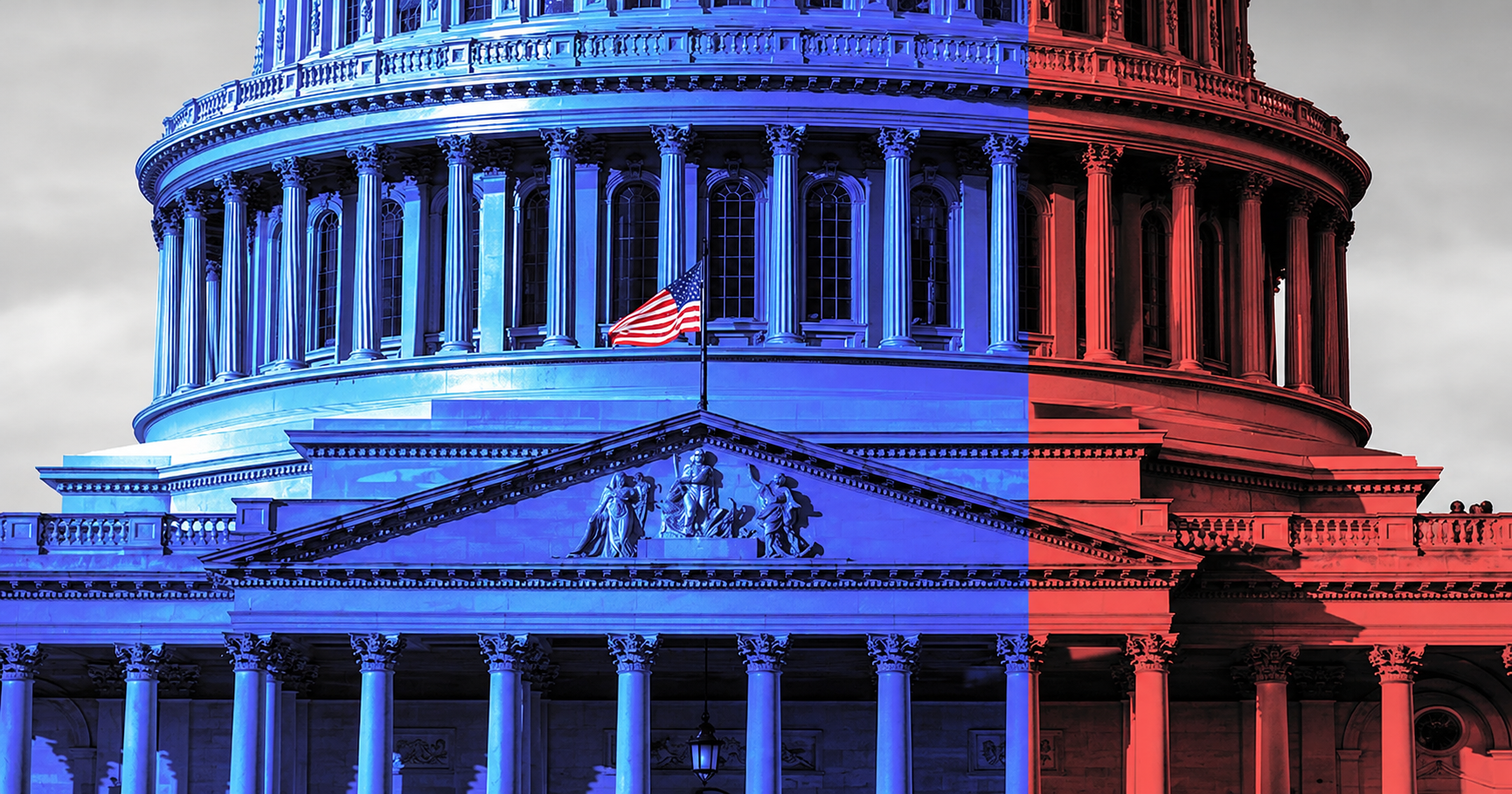
For enforcement, the midterms changed the venue, not the policy. For EB-5, Congress is the venue that decides whether there is a program at all.
For enforcement, the midterms changed the venue, not the policy. For EB-5, Congress is the venue that decides whether there is a program at all, and it has a deadline printed in the statute.
What Voters Actually Said
Immigration did not decide this election, but it did not sit it out either. In the NBC News exit poll, 57 percent of voters said the administration’s immigration enforcement had gone too far, 20 percent said not far enough and 22 percent said it was about right. Sixty percent disapproved of how ICE was doing its job. [6] Only 14 percent named immigration as the country’s most important issue, well behind the economy at 39 percent and the state of democracy at 32 percent. [7]
Here is the detail that should keep both parties humble: on which party is better able to handle immigration, Republicans still led Democrats 44 to 41. [8] Voters did not reject immigration control. They rejected the way it has been carried out. Judging by the week’s personnel announcements, that distinction did not survive the trip to the West Wing. Gallup’s June survey found 73 percent of Americans calling immigration a good thing for the country, down from a record 79 percent in 2025 but still above the 25-year average of 67 percent. [9] In the AP Voter Poll, about six in ten voters said immigrants do more to help the country than to hurt it. [10]
There is one immigration question on which Americans are almost perfectly united, and it is the one EB-5 cannot afford to ignore. In January, Pew asked whether people should receive priority in the immigration process if they pay a $1 million fee. Seventy-nine percent said no, including 67 percent of Republicans. In a country that agrees on almost nothing, that is close to a landslide. [11]
EB-5 is not a fee, and that distinction is the program’s whole defense. An EB-5 investor puts capital at risk in a U.S. business that must create at least ten full-time jobs, and can lose that capital. The product that actually matches Pew’s question is the Gold Card: $1 million paid to the government plus a $15,000 processing fee, with no job requirement. [12] In other words, the President proposed replacing the program voters might defend with the one they told Pew they would not: a rare policy that unites 79 percent of the electorate against it.
Why the Machinery Does Not Change
Congress’s classic weapon is the power of the purse, and on enforcement the purse has already been filled. The 2025 reconciliation law gave ICE $75 billion in supplemental funding that remains available through September 2029. [13] Undoing that would take a new law, which the President can veto and which only two-thirds of each chamber can rescue. Homeland Security Secretary Markwayne Mullin answered the election in three words: “Deportations will continue.” [14]
Then came the personnel decision. Miller, 41, is credited with shaping the 2018 “zero tolerance” border policy that separated families and the 2017 travel ban, and in May 2025 he said the administration had set “a goal of a minimum of 3,000 arrests for ICE every day.” [15] A chief of staff controls access to the President and the flow of paper to his desk. If personnel is policy, this was a policy announcement.
What Democrats gain is the power to ask questions under oath. Rep. Robert Garcia, the incoming chair of the House Oversight Committee, put it bluntly: “Stephen Miller should lawyer up.” [16] Subpoenas, hearings and document demands are real tools. But a hearing does not decide a single petition, release a single detainee or schedule a single consular interview. It does, however, make excellent television.
Legal Immigration Has Been Squeezed Too
The administration’s pressure has not been confined to the border. In January, the State Department paused immigrant visa issuance for nationals of 75 countries. A federal court ended that pause, and the Department confirmed it was no longer in effect as of August 21. [17] Four days after losing in court, the Department paused immigrant visa interviews worldwide for consular training on public charge screening. As of November 2, interviews remained paused at many posts with no general resumption date.
Inside the country, a May 21 USCIS policy memorandum, PM-602-0199, recast adjustment of status as “a matter of discretion and administrative grace, and an extraordinary relief.” [19] EB-5, the one immigrant visa that requires the applicant to create American jobs, has felt the squeeze too. The approval rate for regional center investor petitions (Form I-526E) fell from 94 percent in fiscal 2025 to 76 percent in the April to June 2026 quarter, while the number of pending petitions climbed to 11,192, up 25 percent in a year. [20]
Notice who did the checking. The 75-country pause ended by court order. A federal court in Colorado set aside the 2024 EB-5 fee schedule in November 2025. [21] So far, judges have done more to constrain this administration’s immigration agenda than legislators have, which says something about both. That makes the one area where Congress holds the pen all the more important.
The Exception: A Program With an Expiration Date
The standalone EB-5 program is permanent law. Its Regional Center Program, which accounted for 1,599 of the 1,665 investor petitions filed in the April to June 2026 quarter, is not. [20] The EB-5 Reform and Integrity Act of 2022 authorized it only through September 30, 2027. [22] Petitions filed on or before September 30, 2026 are protected by a grandfathering clause and must keep being processed even if the program lapses. Petitions filed after that date carry no such protection. [23]
This is not a hypothetical. It is a rerun. When the program last expired, on June 30, 2021, it stayed lapsed for nearly nine months, and USCIS did not process pending regional center cases in the meantime. [24] Only Congress can prevent a repeat. In January, an industry coalition asked the Senate Judiciary Committee to extend the program to September 30, 2032, with matching grandfathering protection, by attached to a must-pass funding legislation. [25]
That letter went to Chairman Chuck Grassley, who co-wrote the 2021 reauthorization bill with Sen. Patrick Leahy and never pretended to be the program’s cheerleader. “Absent these fixes, this program should not be allowed to continue,” he said at the time. [26] His bill also shows the limits of any single senator: on June 24, 2021, his request to pass it by unanimous consent was blocked by a fellow Republican, Sen. Lindsey Graham. [27] The reforms finally passed in March 2022 inside an omnibus spending law. [22]
After Democrat Rob Sand won the Iowa governorship, Grassley’s office said flatly: “Senator Grassley is not resigning.” [28] He keeps his seat. In January he loses the Judiciary gavel to the new Democratic majority, and Sen. Dick Durbin, the committee’s senior Democrat, retires. [29] The two senators most associated with the 2022 law will no longer be running the committee when the 2027 deadline arrives.
The Money Myth
It is tempting to argue that USCIS needs EB-5 money and will therefore make sure the program survives. The agency’s own fee rule says otherwise. It puts the cost of running EB-5 at $105.0 million, against total costs of about $6.96 billion for the agency’s main fee account, and states that the new fees “will only recover the cost of the EB-5 program and will not recover costs for other programs.” [30] At the old fees, EB-5 was running $48.4 million short. Investors are not bailing out the agency. They are being asked to pay their own way.
They will pay more of it from November 30, when the I-526E filing fee rises from $3,675 to $7,850. [31] EB-5 is not USCIS’s piggy bank. It is a customer that has just been handed a bigger bill for the same wait.
Five Questions for the New Congress
- Will reauthorization ride on fiscal 2028 appropriations, which are due the same day the Regional Center Program expires?
- Will a new law protect investors who filed after the September 30, 2026 grandfathering date?
- Will the President sign an extension of a program he promised to end, with Stephen Miller running his staff?
- Who will lead the Senate Judiciary Committee, and what is that senator’s record on EB-5?
- Will oversight extend beyond ICE to legal-immigration delivery: the I-526E backlog, the worldwide interview pause and PM-602-0199?
For the next two years, most of immigration policy will be argued over in hearing rooms and courtrooms, at considerable length and to limited effect. EB-5 is the rare exception where Congress holds the pen, the President holds the veto, and the date is already set: September 30, 2027.
What investors should note now
November 30, 2026: new USCIS EB-5 fees apply to filings postmarked on or after this date. [31]
January 1, 2027: the minimum investment amounts adjust for inflation under the statute. USCIS has not yet published the new figures.
After September 30, 2026: new regional center petitions carry no statutory grandfathering protection if the program lapses. [23]
General information, not legal advice. Speak with counsel about your own case.
U.S. and U.K. global immigration law firm specializing in EB-5 and the residency and citizenship by investment programs.
Sources
[1] Gulf News, “Clock ticking for EB-5 investors as Trump unveils $5M Gold Card,” Feb. 2025 (quoting the President, Feb. 25, 2025).
[2] Yellow.law, “Trump Gold Card vs EB-5 in 2026,” citing VisaVerge, July 27, 2026.
[3] Suzanne Lazicki, EB-5 Updates (Lucid Text), “Sluggish volumes and rising denial rates continue in FY2026 Q3 processing data,” Sept. 9, 2026 (USCIS Net Backlog report).
[4] CBS News, “Democrats win control of Senate,” Nov. 3 to 4, 2026; CNBC, midterm results, Nov. 4, 2026.
[5] NBC News, “Trump names Stephen Miller his new chief of staff, replacing Susie Wiles,” Nov. 6, 2026.
[6] Newsweek, “How ICE Quietly Escaped the Midterms Heat,” Nov. 4, 2026 (NBC News Exit Poll).
[7] NBC News, “Many voters saw midterm election as a rebuke of Trump, NBC News Exit Poll shows,” Nov. 2026.
[8] NBC News Exit Poll, as reported by Trending Politics News, Nov. 2026.
[9] Gallup, “Americans’ Support for Immigration Down, Still Strong,” July 9, 2026.
[10] Associated Press, via The Boston Globe, “After their midterm win and Stephen Miller’s promotion, Democrats gear up for a fight on immigration,” Nov. 7, 2026.
[11] Pew Research Center, “How Americans View Key Trump Administration Immigration Policies,” Jan. 29, 2026.
[12] Golden Harbors, “US Gold Card 2026: Status, Cost, and the Legal Challenge Explained,” July 20, 2026.
[13] Herman Legal Group, “What the 2026 Midterms Mean for Immigration,” Nov. 6, 2026 (citing One Big Beautiful Bill Act, Pub. L. 119-21).
[14] Associated Press, via The Boston Globe, Nov. 7, 2026.
[15] Al Jazeera, “Who is Stephen Miller, Trump’s new White House chief of staff?,” Nov. 6, 2026.
[16] House Oversight Committee Democrats, statement of Ranking Member Robert Garcia, Nov. 6, 2026.
[17] U.S. Department of State guidance, as reported by Arias Villa, “75-Country Immigrant Visa Pause Is No Longer in Effect,” 2026.
[19] USCIS, Policy Memorandum PM-602-0199, May 21, 2026.
[20] IIUSA, “I-526E Data Analysis for Q3 FY2026,” Sept. 10, 2026.
[22] EB-5 Reform and Integrity Act of 2022, enacted in the Consolidated Appropriations Act, 2022; Congressional Research Service, R44475.
[23] INA 203(b)(5), 8 U.S.C. 1153(b)(5); IIUSA Business Practices Committee, Grandfathering Resource, July 27, 2026.
[24] Congressional Research Service, “EB-5 Immigrant Investor Program,” R44475.
[25] Industry coalition letter to Senate Judiciary Committee Chairman Grassley, Jan. 15, 2026 (via National Association of Realtors).
[26] Office of Sen. Patrick Leahy, “Leahy, Grassley Introduce EB-5 Investor Visa Integrity Reform Bill,” Mar. 18, 2021.
[27] Homeland Preparedness News, “EB-5 Regional Center Program reauthorization blocked,” June 2021.
[28] Iowa Capital Dispatch, “Sen. Chuck Grassley doesn’t plan on resigning before Sand becomes governor,” Nov. 5, 2026.
[29] Capitol News Illinois and The Washington Times, on Sen. Durbin’s retirement, Apr. 2025.
[30] DHS, U.S. Citizenship and Immigration Services EB-5 Fee Rule, 91 Fed. Reg. 61940 (Sept. 30, 2026).
[31] Immigration Analytics, “EB-5 Fees for Investors Double by Nov. 30, 2026,” Sept. 29, 2026.
[32] 8 U.S.C. 1153(b)(5)(C); CanAm Enterprises, “The 2027 EB-5 Investment Amount Increase,” July 2026